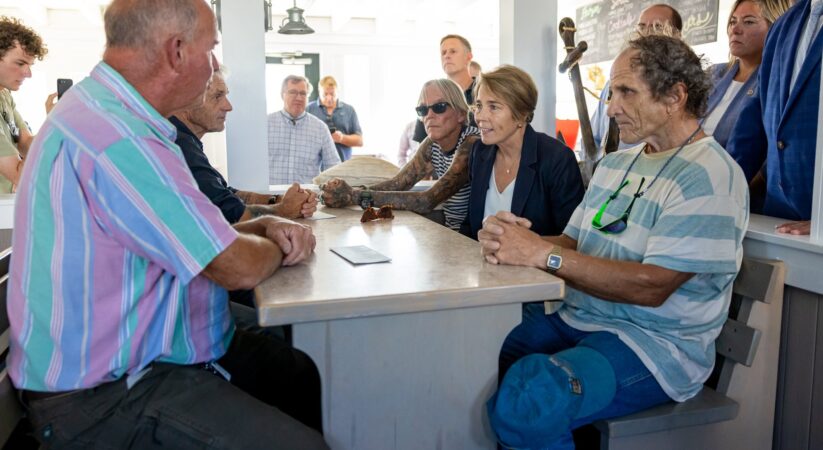
Governor meets with local harvesters and delivers checks to help support income lost during 12-day emergency closure
ESSEX – Governor Maura Healey today delivered $300,000 in direct financial relief to North Shore shellfish harvesters that lost income during the emergency shellfish closure caused by the Haverhill sewer overflow.
The relief program, administered by the Massachusetts Division of Marine Fisheries (DMF), was created following the 12-day closure to help cover the maximum estimated value of shellfish that could have been harvested from the affected growing areas during that period.
Governor Healey met with local shellfish harvesters at Woodman’s of Essex, a longtime North Shore seafood restaurant and family business known for its soft-shell clams, to hear directly about the impact of the closure and deliver relief checks.
“When the sewer break forced shellfish beds to close during one of the busiest times of the year, we told these harvesters that we would have their backs,” said Governor Maura Healey. “Today, we’re delivering on that commitment. These are hardworking families and small businesses that are an important part of the North Shore’s economy and way of life, and we’re going to keep supporting them, protecting this industry and giving them more opportunities to get out on the water and earn a living.”
“Shellfishing is a way of life on the North Shore, but it’s also an iconic business that supports families, local restaurants, and our coastal communities,” said Department of Fish and Game Commissioner Tom O’Shea. “This relief helps make up for days these harvesters lost and helps keep an important part of our blue economy working.”
“Here at DMF, our responsibility is to ensure Massachusetts shellfish are safe, healthy and delicious,” said DMF Director Dan McKiernan. “A key part of this mission is working diligently to protect public health and support our shellfish harvesters. We are proud to deliver this critical funding and committed to helping our shellfish industry thrive for generations to come.”
On June 29, DMF issued an emergency closure of shellfish growing areas N1—N14 in Gloucester, Newburyport, Essex, Ipswich, Newbury, Rockport, Rowley, and Salisbury due to the sewer overflow in Haverhill. The closure was required to protect public health and comply with national shellfish sanitation standards.
As water quality improved, DMF tested shellfish from affected areas for indicators of contamination. Those tests came back negative on July 9, allowing the most active shellfish areas to move out of the extended emergency closure and reopen as weather conditions allowed.
Governor Healey is working to give North Shore shellfish harvesters more days on the water by investing in clean water and shellfish research to safely reduce closures.
Last week, the Governor announced expanded access to shellfish harvesting in Plum Island Sound after two years of study by DMF that found significant improvements in water quality. The updated requirements will cut rainfall-related closures by more than half in most of the Sound and could give more than 200 commercial shellfishers an average of 72 additional harvesting days each year.
The Administration is also continuing to invest in the water infrastructure communities need to prevent pollution and protect drinking water. Following the Haverhill sewer force main break, Governor Healey called for continued federal investment in the Clean Water and Drinking Water State Revolving Funds, which help communities modernize aging water and sewer systems and protect water quality.
Statements of Support
Senate Minority Leader Bruce Tarr, Chair of the Ipswich Shellfish Sustainability Task Force and Northeast Coastal Coalition:
“The discharge of untreated effluent into the Merrimack River caused an economic disaster for businesses throughout the region, and the softshell clam industry was among the hardest hit. Shellfish beds needed to be closed in a time of peak demand for shellfish around the July 4th holiday, dealing a devastating blow to those who earn a living on the clam flats. This much needed and deserved relief will help them after a time when their clam forks were idle, but their bills kept coming. Thanks to all who brought their voices of support to the discussion that led to these grants, and to the Division of Marine Fisheries and the Department of Fish and Game for turning need into action.”
State Representative Kristin E. Kassner:
“Our clammers and oyster farmers fight difficult conditions every day to deliver the healthy, delicious shellfish that our region is famous for. When the sewer main break forced the closure of the shellfish beds out of an abundance of caution, our legislative delegation worked with the Healey-Driscoll administration to secure reimbursement for the harvest that was lost. It is a relief to see these funds finally delivered to the shellfish harvesters who were adversely affected by the sewage overflow. These checks, along with the new rain closure rules, should strengthen this centuries-old industry so that it continues to thrive for years to come.”
State Representative Dru Tarr:
“Shellfishing is woven into the history, economy, and identity of Cape Ann, and our harvesters shouldn’t have to bear the financial burden of an emergency beyond their control. I’m grateful that our delegation and the Healey-Driscoll administration were able to deliver this relief, while also working to safely reduce closures and give our harvesters more days on the water. These efforts will help protect local livelihoods and keep this historic industry strong.”